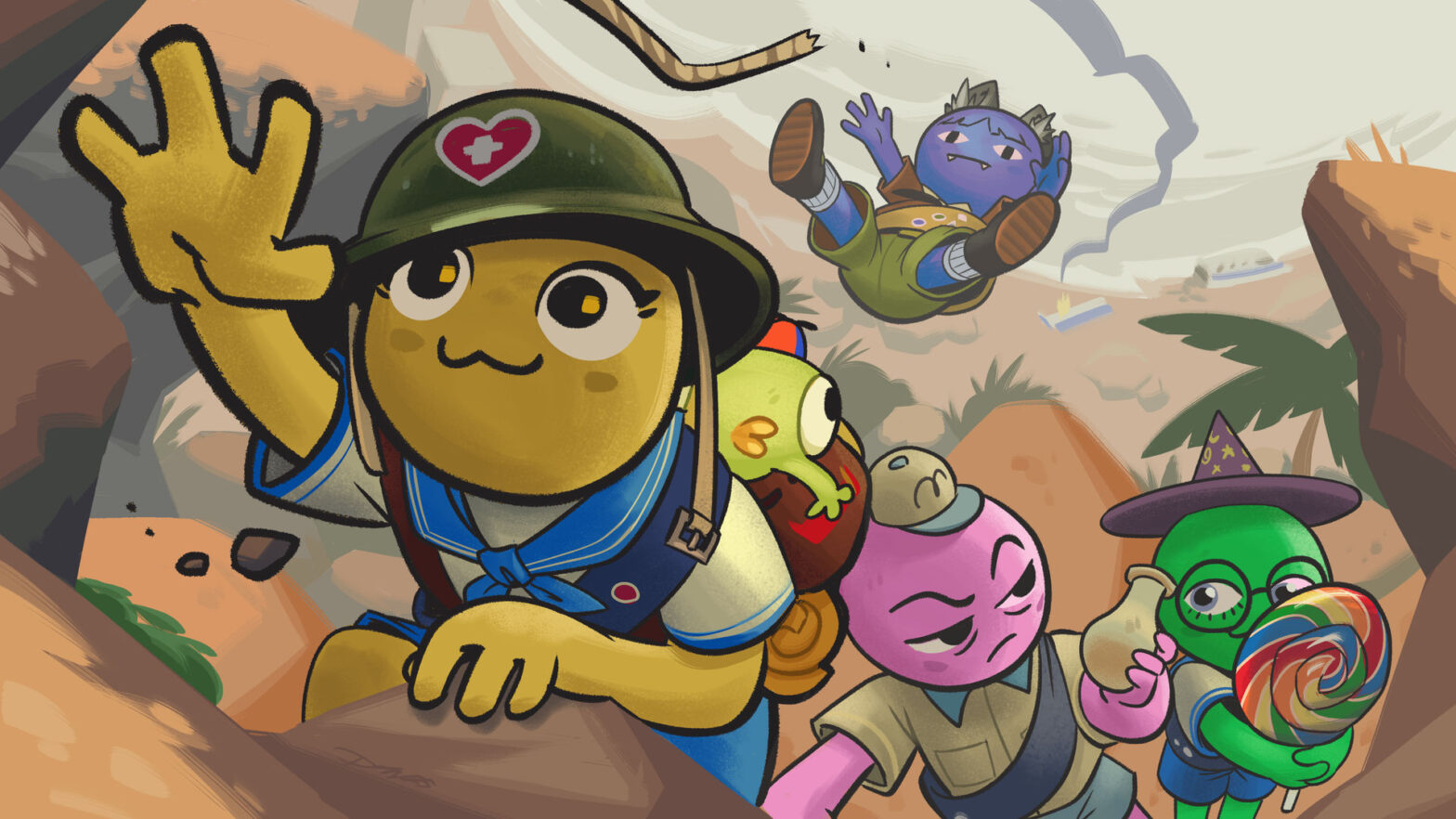
Dalam PEAK, pemain harus bekerja sama untuk mendaki tebing-tebing tinggi dengan menggunakan peralatan mendaki yang terbatas. Setiap langkah harus diperhitungkan dengan matang, karena satu kesalahan dapat menyebabkan pemain jatuh dan kehilangan nyawa. Komunikasi dan koordinasi antar anggota tim menjadi sangat penting untuk menentukan rute terbaik, berbagi peralatan, dan saling membantu saat salah satu anggota mengalami kesulitan. Game ini menguji ketahanan fisik dan mental pemain dalam situasi yang penuh tekanan. Tidak ada panduan atau petunjuk yang jelas di PEAK; Anda dan tim harus mencari tahu sendiri cara terbaik untuk mendaki. Anda harus memeriksa setiap pegangan, menguji kekuatannya, dan memutuskan apakah aman untuk digunakan. Peralatan yang terbatas berarti Anda harus membuat keputusan sulit tentang apa yang harus dibawa dan kapan harus menggunakannya. Angin, hujan, dan kondisi cuaca lainnya juga memengaruhi permainan, menambahkan elemen ketidakpastian yang membuat setiap sesi pendakian terasa berbeda. Ketika salah satu anggota tim jatuh, itu adalah akhir dari perjalanan. Tidak ada respawn, tidak ada kesempatan kedua. Ini adalah permainan yang benar-benar berisiko tinggi.
PEAK – Memanjat Tebing dengan Risiko Kematian Nyata
Bagi penggemar game ko-op yang menantang fisik dan mental, PEAK adalah game yang wajib dicoba. Game ini adalah simulasi memanjat tebing di mana setiap kesalahan sekecil apa pun bisa berakibat fatal. Dirilis pada 17 Juni 2025 oleh Team PEAK dan Landfall Publishing, PEAK menawarkan pengalaman mendaki yang realistis dengan elemen kerja sama tim yang sangat penting. Tidak seperti game ko-op lainnya di mana kematian hanya berarti respawn, di PEAK, setiap langkah yang Anda ambil adalah keputusan hidup dan mati. Game ini dirancang untuk menguji batas fisik dan mental Anda, serta kemampuan Anda untuk bekerja sama di bawah tekanan yang luar biasa. Untuk menemukan informasi lebih lanjut tentang game-game ko-op yang menantang, kunjungi kingbet188 yang selalu menyajikan berita gaming terupdate.
Yang bikin PEAK menarik adalah tingkat realisme dan ketegangan yang berhasil diciptakan. Tidak ada respawn instan di sini; kematian adalah permanen dan akan mengakhiri permainan. Ini menambahkan elemen risiko yang membuat setiap keputusan terasa sangat berarti. Fisika yang realistis juga membuat setiap gerakan terasa nyata, dari pegangan tangan yang licin hingga hembusan angin yang bisa membuat Anda kehilangan keseimbangan. PEAK juga menawarkan 4 bioma berbeda dengan tingkat kesulitan yang beragam, dan peta yang berganti setiap 24 jam. Dengan update terbaru yang menghadirkan bioma baru dan lebih banyak tantangan, PEAK terus menjadi salah satu game ko-op paling menantang dan memuaskan bagi para penggemar genre ini. Visual yang realistis dengan detail lingkungan yang luar biasa menciptakan dunia yang terasa hidup dan imersif. Musik yang minimalis dan atmosferik menambah ketegangan, dengan suara angin dan gemerisik batu yang membuat Anda selalu waspada. Dengan semua elemen ini, PEAK adalah game yang akan menguji keberanian dan kerja sama tim Anda seperti tidak ada game lain.
Game slot online telah menjadi salah satu bentuk hiburan paling populer di dunia digital. Dari kasino fisik hingga platform online, game slot berhasil menarik perhatian jutaan pemain dengan pesonanya yang khas. Apa rahasia di balik popularitas yang terus meningkat ini? Apakah hanya karena keberuntungan, atau ada faktor-faktor lain yang membuat game slot begitu istimewa? cr777 menjadi salah satu platform yang menyaksikan langsung bagaimana game slot online terus tumbuh dan diminati oleh berbagai kalangan.
Salah satu faktor utama popularitas game slot online adalah aksesibilitasnya. Dengan hanya menggunakan smartphone atau komputer dan koneksi internet, siapa pun dapat mengakses ribuan game slot dari berbagai provider. Tidak ada batasan waktu atau tempat; pemain dapat menikmati permainan favorit mereka kapan saja dan di mana saja. Kemudahan akses ini membuat game slot menjadi pilihan hiburan yang praktis bagi mereka yang memiliki jadwal sibuk namun tetap ingin menikmati sensasi bermain. Berbeda dengan permainan kasino lainnya yang mungkin memerlukan kehadiran fisik atau peralatan khusus, game slot online dapat dinikmati dengan sangat mudah oleh siapa saja.
Variasi tema yang tak terbatas juga menjadi daya tarik utama game slot online. Dari tema petualangan di hutan belantara, mitologi Yunani yang epik, hingga film dan acara TV populer, semua tersedia dalam berbagai pilihan. Keberagaman ini memungkinkan setiap pemain menemukan game yang sesuai dengan minat dan suasana hati mereka. Tema yang menarik membuat pengalaman bermain lebih imersif dan menghibur. Beberapa game bahkan memiliki alur cerita yang berkembang seiring dengan kemajuan permainan, memberikan pengalaman yang mirip dengan bermain game petualangan. Tidak heran jika game slot mampu menjangkau berbagai segmen pemain, dari yang menyukai cerita mendalam hingga yang hanya ingin hiburan santai.
Faktor lain yang tidak kalah penting adalah potensi kemenangan besar yang ditawarkan. Banyak game slot menawarkan jackpot progresif yang hadiahnya terus bertambah hingga dimenangkan oleh pemain beruntung. Kesempatan untuk memenangkan jumlah uang yang mengubah hidup dalam satu putaran adalah daya tarik yang sangat kuat. Bahkan tanpa jackpot progresif, game slot tetap menawarkan peluang kemenangan yang signifikan melalui fitur-fitur bonus seperti putaran gratis, pengali, dan simbol liar. Fitur-fitur ini memberikan sensasi dan kegembiraan tersendiri yang membuat pemain terus kembali untuk mencoba keberuntungan mereka.
Inovasi teknologi juga berperan besar dalam popularitas game slot online. Dengan grafis yang semakin realistis, animasi yang halus, dan efek suara yang imersif, game slot modern menawarkan pengalaman yang mendekati kualitas sinematik. Beberapa game bahkan menggunakan teknologi 3D dan virtual reality untuk menciptakan dunia yang lebih hidup. Inovasi ini membuat game slot tidak hanya tentang memutar gulungan, tetapi juga tentang menikmati pengalaman visual dan audio yang memukau. Seiring dengan perkembangan teknologi, game slot akan terus berevolusi dan menawarkan pengalaman yang semakin menarik bagi para pemainnya.
Game slot online telah menjadi salah satu bentuk hiburan paling populer di dunia digital. Dari kasino fisik hingga platform online, game slot berhasil menarik perhatian jutaan pemain dengan pesonanya yang khas. Apa rahasia di balik popularitas yang terus meningkat ini? Apakah hanya karena keberuntungan, atau ada faktor-faktor lain yang membuat game slot begitu istimewa? cr777 menjadi salah satu platform yang menyaksikan langsung bagaimana game slot online terus tumbuh dan diminati oleh berbagai kalangan.
Salah satu faktor utama popularitas game slot online adalah aksesibilitasnya. Dengan hanya menggunakan smartphone atau komputer dan koneksi internet, siapa pun dapat mengakses ribuan game slot dari berbagai provider. Tidak ada batasan waktu atau tempat; pemain dapat menikmati permainan favorit mereka kapan saja dan di mana saja. Kemudahan akses ini membuat game slot menjadi pilihan hiburan yang praktis bagi mereka yang memiliki jadwal sibuk namun tetap ingin menikmati sensasi bermain. Berbeda dengan permainan kasino lainnya yang mungkin memerlukan kehadiran fisik atau peralatan khusus, game slot online dapat dinikmati dengan sangat mudah oleh siapa saja.
Variasi tema yang tak terbatas juga menjadi daya tarik utama game slot online. Dari tema petualangan di hutan belantara, mitologi Yunani yang epik, hingga film dan acara TV populer, semua tersedia dalam berbagai pilihan. Keberagaman ini memungkinkan setiap pemain menemukan game yang sesuai dengan minat dan suasana hati mereka. Tema yang menarik membuat pengalaman bermain lebih imersif dan menghibur. Beberapa game bahkan memiliki alur cerita yang berkembang seiring dengan kemajuan permainan, memberikan pengalaman yang mirip dengan bermain game petualangan. Tidak heran jika game slot mampu menjangkau berbagai segmen pemain, dari yang menyukai cerita mendalam hingga yang hanya ingin hiburan santai.
Faktor lain yang tidak kalah penting adalah potensi kemenangan besar yang ditawarkan. Banyak game slot menawarkan jackpot progresif yang hadiahnya terus bertambah hingga dimenangkan oleh pemain beruntung. Kesempatan untuk memenangkan jumlah uang yang mengubah hidup dalam satu putaran adalah daya tarik yang sangat kuat. Bahkan tanpa jackpot progresif, game slot tetap menawarkan peluang kemenangan yang signifikan melalui fitur-fitur bonus seperti putaran gratis, pengali, dan simbol liar. Fitur-fitur ini memberikan sensasi dan kegembiraan tersendiri yang membuat pemain terus kembali untuk mencoba keberuntungan mereka.
Inovasi teknologi juga berperan besar dalam popularitas game slot online. Dengan grafis yang semakin realistis, animasi yang halus, dan efek suara yang imersif, game slot modern menawarkan pengalaman yang mendekati kualitas sinematik. Beberapa game bahkan menggunakan teknologi 3D dan virtual reality untuk menciptakan dunia yang lebih hidup. Inovasi ini membuat game slot tidak hanya tentang memutar gulungan, tetapi juga tentang menikmati pengalaman visual dan audio yang memukau. Seiring dengan perkembangan teknologi, game slot akan terus berevolusi dan menawarkan pengalaman yang semakin menarik bagi para pemainnya.
The gaming industry entered 2026 with renewed momentum after a sharp contraction between 2022 and 2024. That period—defined by widespread layoffs, budget reductions, and investor pullback—marked a necessary correction rather than structural decline. The froth of pandemic-era growth had obscured fundamental realities about development cycles, monetization sustainability, and market saturation. When the correction came, it was painful but cleansing. Today, the industry stands on firmer footing, with clearer strategies and more realistic expectations.
The Gaming Industry’s $350 Billion Future
Player engagement has recovered impressively. According to industry tracking, 55% of gamers increased playtime between July and December 2025, with particularly strong gains in mobile and emerging markets. This improvement, despite continued macroeconomic uncertainty and geopolitical tensions, signals durable demand that transcends economic cycles. Gaming has become so deeply embedded in global entertainment habits that it now behaves more like essential media than discretionary spending.
The financial projections reflect this resilience. Global gaming revenue is expected to grow at a 6% compound annual rate from 2026 to 2030, reaching approximately $350 billion by the end of the decade. For context, that’s larger than the global film industry ($100 billion), the music industry ($75 billion), and North American professional sports ($60 billion) combined. Gaming has become entertainment’s dominant medium, and its lead continues expanding.
Four converging forces drive this growth, each representing a fundamental shift in how games are made, distributed, monetized, and experienced. Understanding these forces is essential for anyone seeking to navigate the industry’s future.
Generative AI compresses development timelines while expanding creative possibilities. Small teams using AI tools achieve fidelity levels historically accessible only to major studios with hundreds of developers. Environments generate from text prompts. Characters animate through natural language. Dialog branches adapt dynamically to player choices. Music scores compose algorithmically based on gameplay context. The cost of content creation falls while the volume of possible content rises. This doesn’t mean human creativity becomes obsolete—quite the opposite. It means creative talent focuses on vision, direction, and curation rather than mechanical execution. The studios that integrate AI most effectively will ship more games, iterate faster, and respond more nimbly to player feedback than competitors relying on traditional pipelines.
Cloud gaming eliminates hardware barriers, turning every screen into a potential gaming device. When processing happens in distant data centers rather than local consoles, the quality of experience depends primarily on network connectivity rather than hardware investment. This democratizes access across geographies and income levels. A player in rural India with a mid-range smartphone and decent broadband can access the same titles as someone in Tokyo with a $2,000 gaming PC. For publishers, this expands addressable audiences by orders of magnitude. For players, it eliminates upgrade anxiety and hardware fragmentation. The technical challenges of latency and compression continue shrinking; within five years, cloud streaming will feel indistinguishable from local rendering for most applications.
User-generated content platforms create self-sustaining creator economies that attract and retain younger audiences with extraordinary effectiveness. Roblox now hosts 1.6 million monetized creators and more than 100 million experiences. Fortnite’s updated creator terms, including full first-year ad-revenue retention, are attracting professional studios into its ecosystem. Minecraft’s enduring popularity stems less from Mojang’s updates than from the infinite variety of player-built worlds. These platforms operate on a fundamentally different economic model than traditional game development: players generate content, players consume content, and the platform captures value while creators earn meaningful income. Engagement compounds because each new player potentially becomes a new creator, expanding the universe of experiences available to everyone.
App Store democratization, driven by global regulatory action, shifts monetization control from platform holders to developers. When Apple and Google commanded 30% of every transaction, mobile gaming economics were distorted toward high-margin, high-churn casual titles optimized for impulse purchases. As developers gain ability to route transactions through their own channels, build direct player relationships, and capture data previously reserved for platforms, the economic center of gravity shifts. Sustainable monetization, player retention, and cross-title loyalty become more valuable than viral acquisition and fleeting engagement. This rewards quality, consistency, and genuine connection over manipulation and extraction.
These forces don’t operate in isolation—they reinforce and amplify each other. Generative AI enables UGC creators to build more sophisticated experiences faster. Cloud gaming makes those experiences accessible across more devices. Direct monetization allows creators to capture more value from their work. The result is a flywheel of increasing capability, accessibility, and sustainability.
The implications extend far beyond gaming itself. As games evolve into persistent, cross-device services, they increasingly resemble social networks, creative tools, and virtual economies. Competitive advantage shifts from hardware ownership to ecosystem orchestration—where content, community, and distribution interlock. Companies like Microsoft, Tencent, and Sony are positioning themselves not merely as game publishers but as platform operators spanning devices, geographies, and interaction modes.
Ken Research projects the global video gaming value pool could reach $500-550 billion by 2030, with 44% representing incremental growth from new monetization channels, expanded audiences, and emerging formats. This projection assumes continued adoption of cloud gaming, sustained growth in UGC platforms, successful integration of generative AI into production pipelines, and favorable resolution of regulatory battles over platform control. Any of these factors could deviate from projections, but the directional trend is clear: gaming’s economic importance will continue growing faster than almost any other entertainment category.
For industry participants, the strategic imperatives are clear. Companies that integrate AI across production pipelines will ship more with less. Those that build cross-platform subscription environments will capture recurring revenue across device transitions. Publishers that embed UGC creation natively into their engines will benefit from player-generated expansion. Developers who establish direct player relationships will control their monetization destiny regardless of platform policies.
The console wars of previous decades—battles over exclusive titles and hardware specifications—are giving way to something larger: a competition for ecosystem dominance where gaming, media, fintech, and social networking converge. The winners won’t be defined by exclusive franchises alone but by their ability to orchestrate complex networks of creators, players, and partners. The losers won’t disappear, but they’ll find themselves serving increasingly narrow audiences while the mainstream flows elsewhere.
As gaming approaches its $350 billion future, the fundamental question isn’t whether the industry will grow but who will capture that growth. The answer depends on decisions being made today—about technology investment, platform strategy, creator relationships, and regulatory engagement. The next five years will determine the competitive landscape for the next generation.
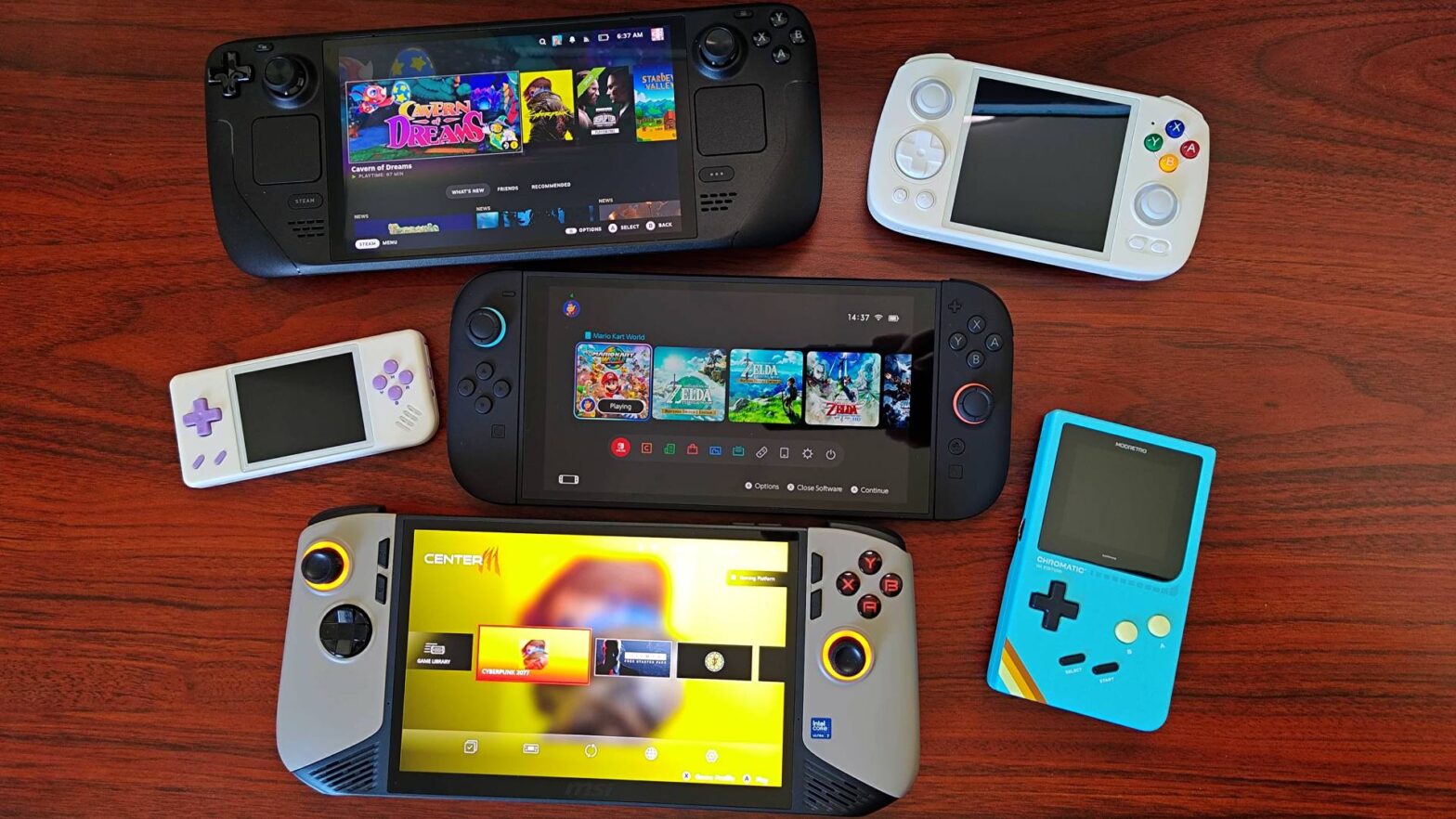
When Valve launched the Steam Deck in February 2022, it proved something the gaming industry had long doubted: handheld PC gaming had mainstream appeal. Previous attempts—from the GP2X to the GPD Win—had remained niche curiosities. The Steam Deck demonstrated that gamers would embrace a device that let them play their existing PC libraries anywhere, without compromises. Three years later, the handheld category has exploded into one of gaming’s most dynamic segments, and at GDC 2026, Microsoft announced features designed specifically for this growing category, beginning with Auto Super Resolution rolling out to ASUS ROG Ally devices in April.
The Handheld Gaming Revolution and Auto SR
Auto Super Resolution represents a philosophical shift in how Microsoft thinks about gaming performance. Traditional upscaling technologies like DLSS, FSR, and XeSS require developer implementation—they’re tools that game creators must integrate, optimize, and test. Auto SR operates differently. It works automatically, analyzing frame data in real-time and applying intelligent upscaling without requiring any game-specific code. For handheld devices with limited thermal budgets and battery capacity, this intelligence matters enormously.
The technical challenge of handheld PC gaming is straightforward but brutal: these devices must run the same games as desktop systems with powerful graphics cards, but within power envelopes of 15-30 watts rather than 200-500 watts. Every watt counts, every degree of heat matters, and every frame must be rendered efficiently. Traditional approaches force tradeoffs: lower resolutions, reduced settings, capped frame rates. Auto SR changes this equation by intelligently allocating rendering resources where they matter most.
When a game is GPU-bound—meaning the graphics processor is the limiting factor—Auto SR can reduce internal rendering resolution while using neural networks to reconstruct high-quality output, effectively trading computational load for visual fidelity. When a game is CPU-bound—meaning the processor is struggling to keep up—Auto SR can optimize frame scheduling and resource allocation to smooth performance. The system learns from gameplay patterns, adapting its behavior to each title’s unique characteristics.
For players, the benefits are tangible. Games that would otherwise stutter or drain batteries within an hour run smoothly, extending both playtime and enjoyment. Titles that required medium settings on the go can push to high or ultra. Battery life improves by 20-30% in many scenarios because the GPU isn’t working as hard. The device becomes more capable, more versatile, and more enjoyable to use.
Microsoft’s investment in handheld gaming extends beyond Auto SR. Xbox Game Pass integration ensures that handheld owners have instant access to hundreds of titles. Cloud saves enable seamless transitions between devices. Xbox Play Anywhere titles require only a single purchase for both PC and Xbox versions. The company is building an ecosystem where handhelds are first-class citizens rather afterthoughts.
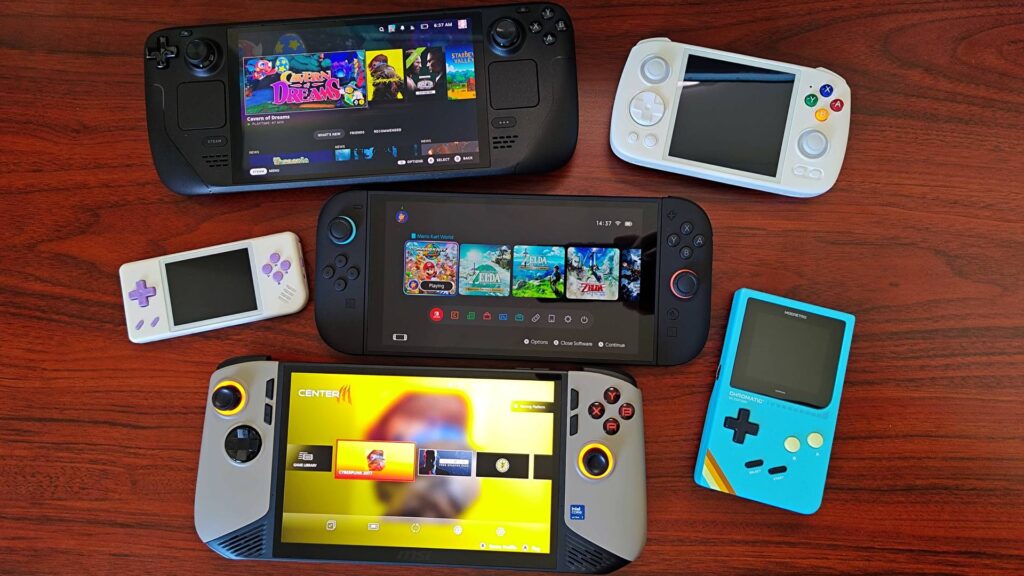
The hardware landscape has diversified dramatically since the Steam Deck’s debut. ASUS ROG Ally targets performance enthusiasts with its 120Hz display and 30W mode. Lenovo Legion Go experiments with detachable controllers and a built-in kickstand. MSI Claw brings Intel Arc graphics into the category. Ayaneo and GPD continue pushing bleeding-edge specifications. Each device makes different tradeoffs: screen quality versus battery life, weight versus performance, price versus features. What unites them is the expectation that PC games should be playable anywhere—on trains, in coffee shops, on couches, during flights.
This expectation carries profound implications for game design. Developers who once optimized solely for desktop experiences must now consider handheld scenarios. UI elements need scaling for smaller screens. Text must remain readable at lower resolutions. Control schemes must accommodate thumbsticks and buttons rather than keyboard and mouse. Touch interfaces become relevant. The studios that adapt thoughtfully capture an expanding audience; those that don’t frustrate players who want their games everywhere.
The technology enabling this revolution extends beyond Microsoft’s contributions. AMD’s Ryzen Z1 and Z2 series processors, designed specifically for handhelds, integrate powerful RDNA 3 graphics with efficient Zen 4 CPU cores. Intel’s new Arrow Lake chips bring improved integrated graphics to competing devices. Valve continues refining SteamOS, proving that a console-like experience is possible on PC hardware. Component suppliers are developing smaller, more efficient displays, batteries, and cooling solutions purpose-built for portable gaming.
Industry projections suggest continued expansion. The handheld PC market is expected to grow at 25% annually through 2030, reaching over 15 million units per year. Asia-Pacific leads adoption, with gamers in China, Japan, and South Korea embracing devices that combine PC library access with portable convenience. Western markets follow, driven by younger gamers who value flexibility and older gamers who appreciate the ability to play during travel or family time.
Microsoft’s strategic positioning reflects this growth potential. By building platform features rather than hardware specifications, the company ensures that its ecosystem benefits regardless of which devices succeed. Auto SR, Gaming Copilot, seamless cross-device progression, and Xbox Game Pass integration all serve the same goal: making gaming frictionless regardless of form factor. Players who invest in Microsoft’s ecosystem know their games, saves, and friends will follow them across any screen.
For the broader gaming industry, the handheld revolution represents both opportunity and challenge. Opportunity because addressable audiences expand with each new device sold. Challenge because optimization requirements multiply across form factors. The studios that embrace this complexity, building flexible engines and adaptable designs, will capture disproportionate share of a rapidly growing market. Those that cling to desktop-only thinking will watch players take their favorite games elsewhere.
For the entire history of mobile gaming, developers have operated under a fundamental constraint: platform holders control the storefronts, and platform holders set the rules. Apple’s App Store and Google Play have functioned as gatekeepers, charging commissions of up to 30% on every transaction and dictating what apps can offer, how they can communicate with users, and which payment methods they can accept. That era is ending. A wave of regulatory intervention, legal challenges, and market evolution is dismantling this system, creating what industry analysts call “App Store democratization”—a fundamental shift in monetization control that will reshape mobile gaming economics for decades.
The App Store Democratization Revolution
The European Union’s Digital Markets Act (DMA) led this charge, taking full effect in 2024 and mandating that designated “gatekeeper” platforms allow alternative payment systems, enable app sideloading, and provide fair access to core platform services. For the first time, developers operating in the EU can direct users to external payment options without fear of retaliation. Apple’s response—a complex system of “core technology fees” and revised commission structures—demonstrates both compliance and resistance, but the principle is established: platform control is no longer absolute.
South Korea’s 2022 Telecommunications Business Act amendment became the first national law requiring multiple payment options in app stores, forcing Google and Apple to allow third-party billing systems. India’s Competition Commission rulings in 2023 went further, mandating that Google allow third-party billing and prohibiting anti-competitive restrictions. These decisions extended structural reform into Asia’s largest and fastest-growing mobile markets, where hundreds of millions of new gamers are coming online each year. The Netherlands and Japan have followed with their own investigations and requirements.
For game developers, these regulatory changes unlock significant margin expansion. The economics are straightforward: shifting purchases from native platform billing—which typically costs 15-30% of revenue—to direct web-store transactions—where payment processing fees average 2-5%—allows studios to reclaim substantial revenue that previously flowed to Apple and Google. For a mid-sized developer generating $50 million in annual mobile revenue, capturing even half of that difference adds $5-10 million directly to the bottom line. For industry leaders like Epic, Activision, and Niantic, the numbers run into hundreds of millions.
Adoption is rising rapidly. According to industry surveys, 33% of adult mobile gamers and 40% of teens have now made purchases through developer-operated web stores. The motivations are clear: discounts unavailable in app stores, exclusive in-game items, loyalty rewards programs, and the ability to accumulate currency across multiple games from the same publisher. Supercell’s web store, launched in 2023, offers 10-20% bonus currency on purchases and has become a significant revenue channel for the company behind Clash of Clans and Brawl Stars. Genshin Impact publisher HoYoverse routes players through its web store for top-up bonuses and exclusive bundles.
Barriers persist despite these gains. Forty percent of non-adopters cite security concerns about entering payment details on third-party sites, while 33% dislike the friction of re-entering information rather than using stored platform credentials. These figures underscore the importance of frictionless checkout experiences, strong security signals, and consistent user communication. Developers who optimize these flows—offering one-click purchases, saved payment methods, and clear security certifications—will capture significantly more direct revenue than competitors relying on platform billing.
The strategic implications extend beyond transaction fees. Direct web stores enable something far more valuable: direct relationships with players. When purchases happen through Apple or Google, the platform owns the customer data, the transaction history, and the communication channel. Developers see aggregate numbers but cannot message players directly, cannot offer personalized promotions based on purchase behavior, and cannot build loyalty programs that span multiple titles. Web stores change this equation entirely. Every transaction becomes an opportunity to capture email addresses, understand preferences, and establish ongoing communication independent of platform intermediaries.
This shift aligns with broader industry trends toward first-party data and direct-to-consumer engagement. As privacy regulations limit cross-app tracking and platforms restrict data sharing, owning customer relationships becomes essential for effective marketing, retention, and monetization. Publishers that build robust direct-to-consumer channels gain compounding advantages: better targeting, lower acquisition costs, higher lifetime value, and reduced vulnerability to platform policy changes.
The regulatory direction is unmistakable. As more jurisdictions align with the EU, Korea, and India, and as global bodies like the OECD develop coordinated approaches to digital platform regulation, the trajectory points steadily toward developer-controlled monetization. This doesn’t mean app stores disappear—they remain valuable for discovery, trust signals, and initial acquisition—but their role shifts from indispensable toll collectors to one component of a diversified distribution strategy.
For small developers and indie studios, this democratization carries both promise and peril. Reduced platform fees mean more revenue per player, potentially improving viability for games that operate on thin margins. But the complexity of operating payment systems, managing tax compliance across jurisdictions, and building web storefronts creates new barriers. Middleware providers like Xsolla and Paddle are stepping in with solutions that handle payment processing, fraud prevention, and regulatory compliance, effectively offering “direct store as a service.” Studios that leverage these tools effectively can capture platform-level margins without platform-level investment.
For the mobile gaming ecosystem as a whole, App Store democratization represents the most significant structural shift since the iPhone’s 2008 App Store launch launched the modern mobile gaming industry. The companies that navigate this transition successfully—building direct channels while maintaining app store presence, optimizing conversion while preserving user trust, capturing data while respecting privacy—will define the next generation of mobile gaming economics. Those that don’t will find themselves subsidizing competitors’ advantages while ceding control of their most valuable asset: the relationship with their players.
Mobile gaming has long suffered a visual gap compared to consoles and PCs. At GDC 2026, Arm demonstrated that gap is closing rapidly—not through faster traditional GPUs alone, but through dedicated neural processing integrated directly into graphics hardware.
Mobile Gaming Leapfrog with Neural Processing
Arm’s approach places NPU-class neural accelerators inside future GPUs, enabling efficient whole-tensor workloads that integrate cleanly with existing rendering pipelines. This architectural alignment means developers can replace compute shaders with neural accelerator dispatches using familiar tools, dramatically lowering adoption barriers.
The showcase was Project Buzz, a reference game demonstrating what becomes possible when neural acceleration is embedded throughout the rendering pipeline. Real-time ray-traced lighting, complex geometry, and advanced shading all ran within mobile power budgets—a combination previously considered impossible.
Sergio Alapont, Arm’s Principal Engineer, framed the breakthrough in practical terms: “Mobile teams are constantly trading visual ambition against frame rate, thermals, and battery life. Neural graphics changes that equation. Instead of cutting features, we can reallocate GPU budget using neural acceleration to maintain quality while staying within real production constraints”.
Neural Frame Rate Upscaling doubles perceived smoothness through neural interpolation, while Neural Super Sampling replaces traditional upscaling with lightweight networks that improve image quality while reducing GPU load. Both techniques leverage motion data and temporal information already present in rendering pipelines, requiring minimal additional engineering.
For game developers, the timing is critical. Willen Yang, another Arm presenter, advised: “Developers need to start experimenting now with the Neural Graphics Development Kit, so they are ready to use AI to power their game titles on mobile with neural accelerators, delivering higher visual quality with lower power and GPU load”.
The hardware timeline aligns with this advice. As neural accelerators become standard in mobile chipsets, the studios that have already built intuition around frame structuring, motion data handling, and neural scheduling will be positioned to deliver experiences that outpace competitors still using traditional rendering approaches.
User-generated content has moved from peripheral feature to central pillar of the gaming industry. In 2024, Roblox paid creators $923 million, Fortnite paid $352 million, and combined payouts are expected to surpass $1.5 billion in 2025. These aren’t participation trophies—they’re serious revenue streams supporting professional creators and, increasingly, traditional game studios.
User-Generated Content on Gaming Industry
Roblox now hosts 1.6 million monetized creators and more than 100 million experiences. Fortnite’s updated creator terms, including full first-year ad-revenue retention, are attracting professional studios into its ecosystem. The message is clear: UGC platforms aren’t just for amateurs anymore.
Demographics explain this shift. According to industry data, 44% of children begin gaming by age five, and 77% by age seven, with first exposure concentrated on UGC platforms like Roblox and Minecraft. Gen Alpha enters gaming not as passive consumers but as creators, building experiences before they fully understand what game development means. This early engagement expands the long-term supply of developer-creators while conditioning players to expect creative tools alongside traditional gameplay.
Discovery patterns reinforce UGC’s importance. Forty percent of gamers report consuming more UGC this year, and 55% have tried a game recommended by a favorite creator. Influencers have become one of the most potent demand engines in the industry, often surpassing traditional marketing in effectiveness.
For traditional publishers, this represents both opportunity and threat. UGC platforms offer distribution channels reaching audiences that don’t browse Steam or visit gaming websites. But they also compete for player attention, creating closed ecosystems where users may never leave Roblox or Fortnite to explore external titles.
The economics favor platforms that successfully integrate UGC. Player-generated content costs nothing to produce while generating engagement that keeps users inside the ecosystem. Successful creators become platform evangelists, attracting audiences and inspiring new creators. It’s a virtuous cycle that traditional development models struggle to match.